

Pushing legacy machinery to its absolute limits to meet 24/7 output targets creates immense strain on your facility. Operating isolated equipment that cannot communicate with modern control systems is a massive risk to your throughput, resulting in operational bottlenecks, manual handling errors, and catastrophic, revenue-draining downtime.
Today, targeted advances in PLC automation, mechatronic synchronisation, and system integration allow Australian manufacturing facilities to eliminate these single points of failure and protect their vital uptime.
Many operations managers understand the benefits of automation but struggle with where to begin. Replacing an entire production line or warehouse management system can feel disruptive and expensive. The reality is that successful automation rarely starts with a complete overhaul. It starts with identifying operational bottlenecks and implementing targeted improvements that deliver measurable results.
For manufacturers, warehouses, FMCG processing facilities, high-speed packaging plants, and heavy industrial facilities, automation should support operational continuity rather than create unnecessary complexity. Here are 10 practical ways to introduce automation into your facility while maintaining productivity and minimising risk.
1. Start with a facility-wide operational assessment
Automation should solve a business problem, not simply introduce new technology.
Before investing in equipment or software, conduct a detailed review of your current operations. Identify where downtime occurs, which manual processes consume the most labour and where safety risks or quality issues exist.
Common opportunities include:
- Manual material handling
- Repetitive production tasks
- Data collection and reporting
- Inventory management
- Asset monitoring
- Quality control processes
A structured assessment creates a roadmap for automation investments and helps prioritise projects that deliver the highest operational value.
2. Automate your highest-risk manual processes
Many facilities continue to rely on labour-intensive tasks that introduce safety risks and operational inefficiencies.
These processes often include:
- Manual lifting and handling
- Repetitive assembly operations
- Hazardous area inspections
- High-frequency data entry
- Inventory counting
Automating high-risk activities improves safety while reducing the likelihood of human error.
For operations leaders, this approach supports both productivity targets and workplace health and safety objectives.
3. Improve visibility through industrial data collection
Many facilities struggle because critical operational data remains trapped within individual machines or disconnected systems.
Automation begins with visibility.
By integrating sensors, PLCs and monitoring systems, operators gain real-time insights into:
- Equipment performance
- Energy consumption
- Production throughput
- Maintenance requirements
- Process efficiency
When data becomes visible, decision-making becomes faster and more accurate.
4. Implement phased system integration
One of the biggest barriers to automation is the perception that everything must be replaced at once.
In reality, successful system integration often occurs in stages.
Existing infrastructure can frequently be connected to modern automation platforms through:
- PLC upgrades
- SCADA integration
- Industrial communication networks
- Data acquisition systems
- Remote monitoring platforms
A phased approach reduces operational disruption while delivering immediate performance improvements.
For many facilities, system integration provides greater value than purchasing entirely new equipment.
5. Introduce automated warehouse management processes
Warehouse automation continues to be one of the fastest-growing areas of industrial automation.
Many facilities still rely on manual inventory tracking and paper-based processes. These methods increase the likelihood of inventory inaccuracies, production delays and fulfilment errors.
Common warehouse automation solutions include:
- Barcode scanning systems
- RFID tracking
- Automated inventory management
- Digital pick-and-pack workflows
- Warehouse management software
- Automated stock replenishment systems
Warehouse automation improves inventory accuracy while providing greater visibility across the supply chain.
6. Use predictive maintenance technologies
Traditional maintenance strategies often rely on either reactive repairs or fixed maintenance schedules.
Predictive maintenance introduces automation into asset management by continuously monitoring equipment condition.
Modern monitoring systems can automatically track:
- Vibration levels
- Temperature changes
- Motor performance
- Electrical load variations
- Lubrication conditions
This allows maintenance teams to identify developing issues before equipment failures occur.
For operations managers, predictive maintenance supports operational continuity while reducing unplanned downtime.
7. Modernise control systems and PLC infrastructure
Many Australian facilities continue to operate legacy control systems that are approaching the end of their service life.
Aging PLCs and outdated control hardware create several challenges:
- Limited spare parts availability
- Increased failure risk
- Cybersecurity vulnerabilities
- Reduced system visibility
- Integration limitations
Modern control systems provide the foundation for future automation projects.
Upgrading PLC and SCADA platforms creates opportunities for advanced reporting, remote access and improved process control without requiring complete facility redesigns. When upgrading, it is critical to partner with an engineering provider who is hardware independent (OEM-agnostic).
At MEX Engineering Group, we specify and program the exact control systems for your facility’s reality—specialising in major platforms like Allen Bradley, Siemens, Omron, Schneider and others —entirely preventing hardware bias and vendor lock-in.
8. Explore robotics where labour shortages exist
Labour shortages continue to impact Australian manufacturing, logistics and industrial operations.
Robotic systems can assist with:
- Palletising
- Packaging
- Material transfer
- Machine tending
- Quality inspection
The goal is not to replace skilled workers. The goal is to allow personnel to focus on higher-value operational tasks while repetitive activities are automated.
Facilities that strategically deploy robotics often improve consistency, safety and throughput simultaneously.
9. Adopt food and beverage warehouse automation strategies
Food manufacturers and distribution facilities face unique operational challenges.
Compliance requirements, product traceability and inventory control all place significant pressure on warehouse operations.
Food and beverage warehouse automation can support:
- Batch tracking
- Inventory rotation
- Cold storage management
- Automated picking systems
- Product traceability reporting
Automation helps ensure products move efficiently through the supply chain while supporting quality and compliance requirements.
For facilities managing large product volumes, automation can significantly improve operational efficiency.
10. Partner with experienced automation specialists
Technology alone does not guarantee successful outcomes. Most generalist engineering firms treat system integration as a fragmented process—one company writes the software off-site, while a separate, transient workforce pulls the cables. This creates massive contractor handoff risk, leading to communication faults and blown budgets.
At MEX Engineering Group, we provide a full-stack alternative. Through our strict in-house engineering capability, we execute the mechanical fabrication, electrical wiring, PLC programming, and final commissioning with our own licensed tradespeople. We strategically align these complex automation upgrades precisely during your narrow planned changeover windows to protect your throughput and minimise revenue-draining offline time.
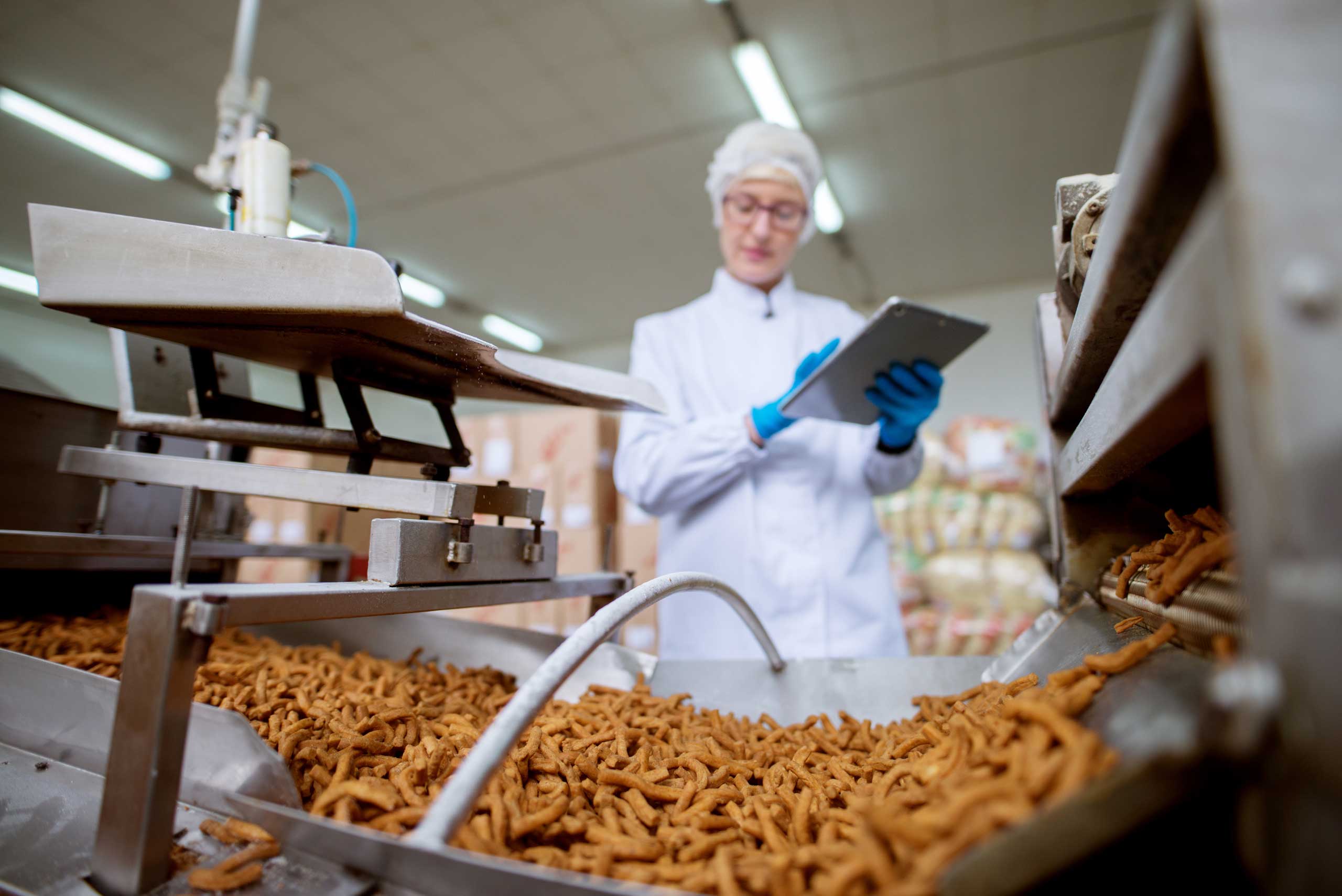
Manual operations vs automated operations
Many facilities understand that automation improves efficiency, but the practical differences are often difficult to quantify. Comparing manual and automated operations highlights where productivity gains, safety improvements and long-term cost savings are typically realised.
Operational Area | Manual Operations | Automated Operations |
Inventory Management | Manual counting and spreadsheet updates | Real-time inventory tracking and automated reporting |
Data Collection | Paper-based records and manual entry | Automatic data capture through sensors and control systems |
Production Monitoring | Reactive troubleshooting | Continuous monitoring with instant alerts |
Quality Control | Visual inspections and manual checks | Automated inspections and data-driven quality assurance |
Maintenance Planning | Fixed schedules or reactive repairs | Predictive maintenance based on equipment condition |
Material Handling | Forklifts and manual movement | Automated conveyors, AGVs and robotic systems |
Reporting | Labour-intensive manual reporting | Automated dashboards and real-time analytics |
Workplace Safety | Higher exposure to repetitive or hazardous tasks | Reduced worker exposure to high-risk activities |
Scalability | Additional labour required for growth | Systems can often scale with minimal workforce increases |
Operational Visibility | Limited visibility across departments | Facility-wide visibility through integrated systems |
The objective of automation is not to remove people from the operation. The objective is to eliminate repetitive, error-prone and low-value tasks so skilled personnel can focus on decision-making, problem-solving and continuous improvement.
For many facilities, the greatest value comes from combining experienced operators with intelligent automation systems. This approach improves productivity while preserving critical operational knowledge.
Common automation mistakes to avoid
Many automation projects fail because organisations focus on equipment rather than outcomes.
Common mistakes include:
- Automating inefficient processes
- Replacing systems prematurely
- Ignoring operator training
- Overcomplicating solutions
- Failing to integrate systems properly
- Neglecting maintenance planning
Automation should simplify operations, improve visibility and strengthen reliability.
The most effective projects align technology investments with operational objectives.
Build a smarter facility through strategic automation
Introducing automation does not require a complete facility transformation.
The most successful organisations take a measured approach, focusing on operational bottlenecks, asset reliability and long-term scalability. Whether through warehouse automation, predictive maintenance, advanced control systems or strategic system integration, incremental improvements often deliver the greatest return on investment.
At MEX Engineering Group, we help Australian industrial facilities modernise critical infrastructure through precision-engineered electrical, instrumentation and automation solutions. Our team bridges the gap between engineering design and on-site execution, ensuring automation projects support operational continuity, compliance and long-term asset performance.
Speak with a senior automation specialistRelated Articles
Preventative vs. Reactive vs. Fractional Maintenance
Discover the differences between preventative maintenance, reactive maintenance, and fractional maintenance, and choose [...]
Read moreMay

Embracing the Future: How 3D printing is revolutionising modern manufacturing
As we navigate through 2025, the landscape of modern manufacturing is undergoing a [...]
Read moreMar
Gail King
With a passion for leadership and fostering a culture of continuous improvement, Gail is dedicated to expanding awareness and growth within the MEX Engineering Group team. With over 20 years of experience, her expertise spans financial operations, strategic planning, and business development. Gail is driven by the success of others, striving to achieve excellence while supporting the growth and sustainability of Australian manufacturing.